

A finished building looks as if it appeared overnight, but it is the result of a long chain of decisions. Understanding real estate project stages helps buyers and investors see where a project stands and what to expect at each step. This article explains the real estate project stages from the first idea to handing over the keys, with practical questions to ask at each point.
It is general and educational, and it describes a common path. The order and names of stages vary between projects and countries. It does not describe any specific project.
An overview of real estate project stages
A project can be split into nine main milestones: idea, land, design, permits, finance and marketing, excavation and foundations, structure, finishing and handover. Some overlap. Marketing may start before permits are complete, and finishing may advance on one floor while another is still being cast.
What matters is that each stage has clear outputs. If you ask about a stage, you should get a document or visible progress, not a promise.
Idea and feasibility study
The story starts with a question: what does this area need? Apartments? A shopping centre? A mixed-use project? The developer studies demand, competition and likely residents, then estimates whether the project can create reasonable value.
A good feasibility study does not rely on enthusiasm. It compares expected cost with possible income and tests bad scenarios too. Buyers rarely see this stage, but it shapes the quality of the whole decision.
Land and legal status
After the idea comes land. The developer needs land that fits in location, size and permitted use, then checks ownership and that it is free of disputes and mortgages.
This stage matters greatly to buyers. A project on land with an unclear legal position can stall or face disputes. Always ask for proof of ownership and which authority registered the land. For more, read Real estate project evaluation: a checklist before you buy.
Design and permits
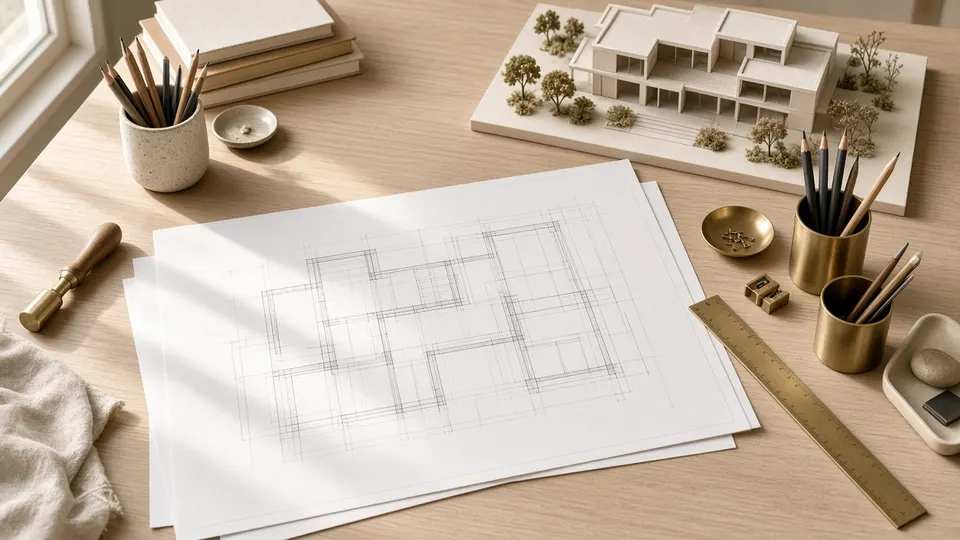
Architects and engineers turn the idea into plans. They begin with a concept, then preliminary drawings, then detailed ones covering structure, electrical, plumbing and air conditioning. The more precise the plans, the fewer surprises during construction.
The plans are then submitted to the competent authorities for a building permit. They may request changes before approving. Orderly construction does not start before the permit.
- Ask to see the permit, or its number and date.
- Check that what you are shown matches the approved plans.
- Ask whether your unit layout can be adjusted before construction.
Finance and marketing
A project needs funding. It may come from the developer's own money, partners, loans or buyers' payments. How it is funded affects speed of construction and your protection as a buyer.
Marketing often begins early, with renderings, models and booking offers. Be careful of urgency here. Make sure what you sign is in a clear contract and that your payments are tied to real milestones. We cover this in our off-plan buying guide.
Excavation and foundations
When work starts on site, the first visible activities are excavation and levelling. Foundations follow, the most important element in a building's stability, and also what disappears from view after backfilling.
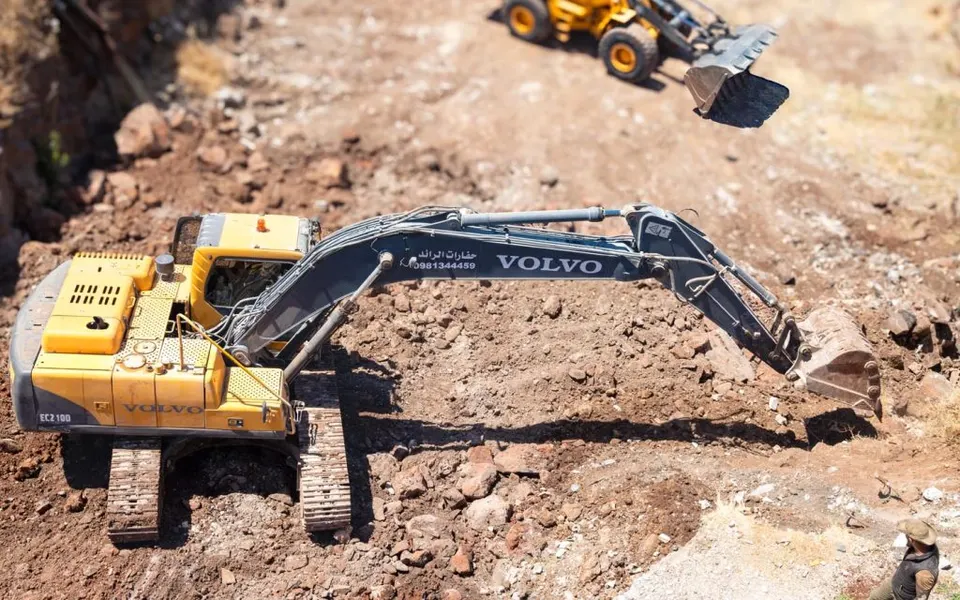
Foundations depend on a soil study, so engineers request soil tests before design. Ask whether these tests were done, what the results were and who supervised the foundations.
This is a good stage to visit the site if the developer allows it. Seeing it first-hand gives a confidence photos do not.
The structure
After the foundations, columns and slabs rise floor by floor. This is the most visible stage, with progress each month. It covers concrete, steel and walls.
The structure needs careful engineering supervision and regular material testing. The quality of concrete and the arrangement of steel secure a building's safety for decades, and mistakes are hard to fix once covered.
- Ask about independent supervision, if any.
- Ask how concrete samples are tested.
- Request periodic progress reports with recent photos.
Services and finishing
Once the structure is complete, electrical, plumbing, air-conditioning and service installations begin, followed by finishing: plaster, floors, paint, doors, kitchens and bathrooms. This stage takes long because many trades are involved.
Here you see the quality the owner will live with daily. Compare what is built with the specification attached to the contract. Watch the order of work, since any error in services becomes costly after finishing.
For general project-management practice, you can visit the Project Management Institute.
Testing and pre-handover
Before handover, systems are tested: electricity, water, drainage, air conditioning, lifts and safety systems. Areas are cleaned and final snag lists are reviewed. Approvals from the authorities may be needed to confirm completion.
Ask which certificates are issued at this stage. They show the building has met operating requirements. Make sure shared areas are ready rather than postponed.
Handover and afterwards
Handover is not the end of the relationship. After you receive the unit, the warranty and after-sales service begin. Inspect the unit carefully, record issues in writing and give the developer a reasonable time to fix them.
- Check doors, windows, damp and installations.
- Actually try the electrics, water and air conditioning.
- Ask for the maintenance manual and warranty details.
- Record meter readings at handover.
Then building management begins. Ask early who manages the shared parts and what the expected charges are.
A project under construction: an example to follow
If you follow a project under construction, use these stages as a map. One of our projects is Mall of Homs, under construction in the Al-Waer district of Homs. Its page gives the project description and unit types as stated in its brochure.
Do not assume dates that have not been announced officially. For the latest information on any project, contact us directly.
Who takes part in a real estate project?
Behind every project is a wide team. Knowing the roles makes it easier to know who answers your question. Some developers combine several roles and others spread them across companies.
- The owner or developer: holds the idea and the land and carries the main responsibility.
- The architect and engineers: design the building and its systems.
- The contractor: carries out the work on site.
- The engineering supervisor: monitors quality and that construction follows the plans.
- The authorities: grant permits and check compliance.
- Financiers and buyers: provide the funds.
Ask who is responsible if a defect appears, and whether the developer is also the builder or hires another company. The answer decides whom you hold to account.
What to ask at each stage
These questions sum up the above. Keep them as a quick list when discussing any project.
- Land: what proves ownership, and is the land free of mortgages?
- Design: are the plans approved, and do they suit my needs?
- Marketing: are my payments tied to progress, and what are the termination terms?
- Foundations: were soil tests carried out?
- Structure: who supervises, and what do progress reports show?
- Finishing: do the materials match the contract?
- Handover: what is the warranty and who handles repairs?
With these questions you rely on what can be verified, not impressions alone. The more answers are in writing, the stronger your protection.
Why projects get delayed
Delay is common in construction and has several causes. Understanding them helps you tell an acceptable delay from a worrying one.
- Late permits and approvals.
- Changes in the availability or cost of materials.
- Design changes during construction.
- Funding problems or poor coordination between contractors.
- Weather or general conditions in the area.
A good developer tells you about a delay early and explains the cause and plan to recover. Silence is the worst sign.
Conclusion
Knowing the real estate project stages helps you read any project clearly. At each stage ask about outputs, tie your payments to progress and keep a written record. Waiting then becomes less stressful.
See our work on the projects page. This article is general and educational and is not legal or engineering advice.