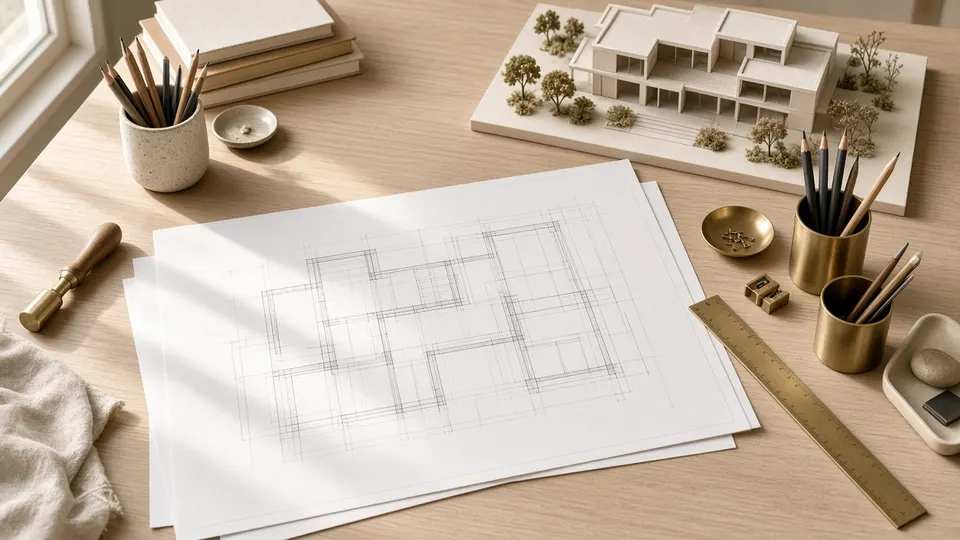

Some companies offer homes for sale before they are finished, and sometimes before work has begun. This is off plan property buying: purchasing from drawings and models rather than from an existing building. It attracts many people, but it carries particular risks. This guide explains off plan property in plain words: what it means, its benefits and risks, and how to protect yourself before paying.
It is general and educational, not legal advice. The laws that govern this kind of sale differ from country to country. Check with the official authorities and a qualified lawyer where you buy.
What does buying off plan property mean?
In an ordinary purchase you see the building, inspect it and then pay. With off plan property you buy a promise of a unit to be built later. You are shown plans, renderings and maybe a model, and you sign a contract in which the developer commits to hand over by a date and to a specification.
The price is usually paid in instalments during construction. Payments should be tied to real construction milestones. That is why every clause in the contract matters.
Why do people buy off plan property?
Buying off plan has a clear appeal. These benefits vary by developer and market, so do not assume them automatically.
- Spreading the price over instalments instead of paying it all at once.
- Choosing the right unit from a wider selection.
- Getting a new unit with modern specifications.
- A possibly lower starting price than a finished unit, which is not guaranteed.
But these benefits come with obligations and risks, and a good decision balances both.
The main risks of off plan property
The biggest risk is that you pay before you see the finished product. So you should know what can happen.
- Delay: handover may slip past the promised date, sometimes by a long time.
- Changed specification: what is delivered may differ from the renderings and model.
- Developer failure: the project may stop because of financial or legal trouble.
- Land problems, such as unclear ownership or no permit.
- Market change: prices may move after you sign, up or down.
This does not mean off plan property is bad. It means it needs more care in checking before you sign.
Check the developer, the land and the permit first
Before any financial detail, ask three things: who is the developer, what land is the project on and is there a building permit? If the answers are not clear and backed by documents, stop.
- Ask for proof of ownership of the land or of the developer's right to build.
- Check it is free of mortgages and disputes with the competent land registry.
- Ask for the building permit number and date.
- Look at the developer's earlier projects and visit one that has been handed over.
You will find more in Real estate project evaluation: a checklist before you buy.
The off plan contract: key clauses
In this type of deal the contract is your first protection, because the unit does not yet exist. Everything you rely on must be written down clearly.
- An exact definition of the unit: number, floor, area and plan.
- The total price and what it includes and excludes.
- A payment schedule linked to milestones.
- The handover date and compensation for delay.
- The technical specification and materials, named where possible.
- The developer's right to change things, and its limits.
- Termination and refund terms.
- The warranty and what follows handover.
Do not sign a contract that leaves the specification to "what the developer decides". And do not accept a clause that lets the developer change everything without your consent.
Linking payments to milestones
The key rule of off plan property: do not pay before what the payment stands for has happened. If you pay large sums early, you lose your leverage when a delay occurs.
Ask how milestones are proved. Is there an independent engineering report? Can you visit? Are funds paid into an account dedicated to the project or into the company's general account? In some countries the law requires escrow accounts to protect buyers' payments. Ask whether that applies where you buy.
Make sure every payment has an official receipt in the name of the contracting party, and keep a copy of everything.
Specification and the show unit
You may be shown a model unit or renderings. They give an impression, but they are not the contract. Ask for the real specification in writing: floors, doors, windows, kitchen and bathroom fittings.
Do not accept general phrases like "luxury finishing" or "high quality materials". Ask for something you can verify at handover. What is not in the contract can be hard to prove later.
To practise reading details, see How to read an apartment floor plan before you buy. It helps you understand what you are buying from the plan.
Following construction after you sign
Signing is not the end of the job. Follow the project regularly so you notice any delay early.
- Ask for periodic progress reports with photos.
- Visit the site if the developer allows it.
- Compare progress with the agreed schedule.
- Write to the developer about any concern.
- Talk to other buyers in the project and share information.
To understand what is happening on site, read Real estate project stages from idea to handover.
Can you sell before handover?
Some buyers think of reselling the unit before they receive it. That is not always possible, and it may involve conditions, fees and the developer's consent. Some regulations prohibit or limit it.
Ask before signing: may I assign the contract, and what are the procedure and fees? Do not build your financial plan on quick profit, since the market does not guarantee it.
Handover and final inspection
When the unit is complete, do not rush to sign the handover. Inspect it against the written specification, preferably with an engineer.
- Compare the real area with the plan.
- Inspect finishing, doors, windows and installations.
- Test the electrics, water and air conditioning.
- Write down each issue and record when it is fixed.
If you find a difference from the contract, ask for it to be put right in writing before completing the formalities.
Financing and extra costs
If you will use a loan or instalments, ask about the total cost, not the instalment alone. Make sure you can cope with a possible delay, since payments may run longer than you expect.
Add registration, transfer, shared maintenance and furnishing to your budget. For professional standards in valuation, see the RICS standards and guidance.
A project under construction: how to approach it
If you are interested in a project under construction, such as Mall of Homs in the Al-Waer district of Homs, first learn what is officially published about it. The project page presents its description and unit types as given in its brochure.
Do not assume booking, payment or handover terms from this article. Ask about them directly through the contact page and request everything in writing. This article promises no terms or prices.
Common mistakes to avoid
- Paying out of fear of rising prices or units running out.
- Relying on verbal promises.
- Ignoring the legal status of the land.
- Settling for renderings without a written specification.
- Accepting a payment schedule not linked to progress.
- Not reading the delay and termination clauses.
Conclusion
Buying off plan property is not necessarily a gamble, but it needs preparation. Check the developer, the land and the permit, insist on a clear contract with a written specification, tie payments to progress and follow construction. With this care your decision becomes safer.
See our work on the projects page. This article is general and educational and is not legal or financial advice.